
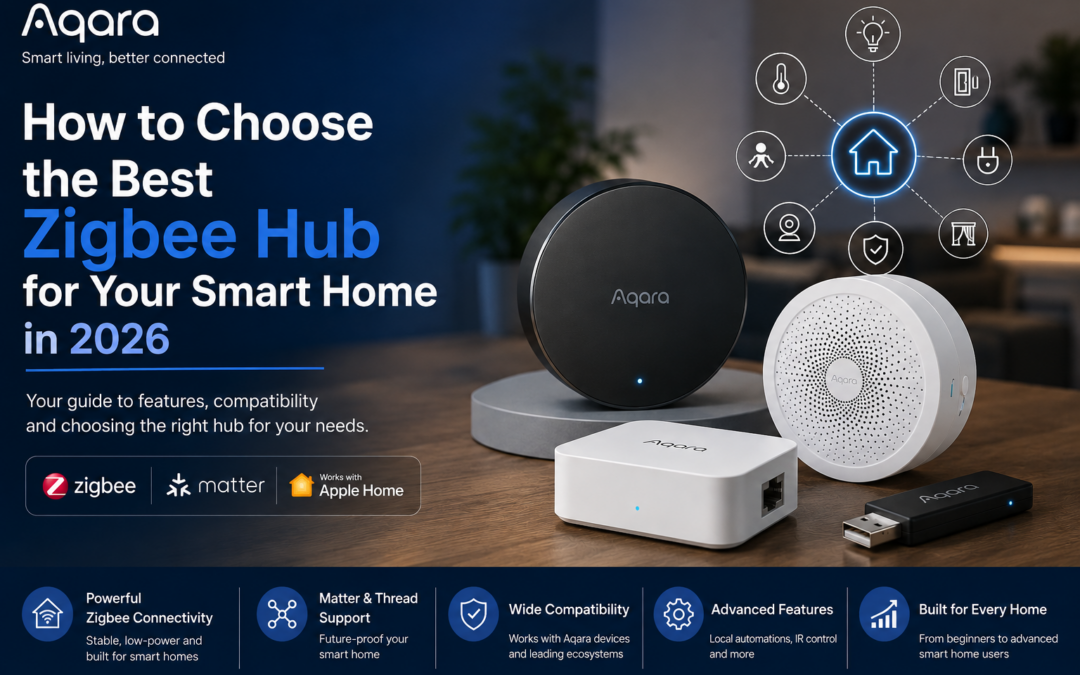
Building a smart home is easier than ever, but choosing the right technology to connect everything can still feel complicated. With terms such as Zigbee, Thread, Matter and HomeKit appearing across smart home products, understanding exactly what you need is important before investing in new devices.
At the centre of many smart home systems is a Zigbee hub. This small but important device helps compatible sensors, switches, lights and other smart devices communicate with each other and connect to your wider smart home ecosystem.
But with several different hubs available, which one should you choose?
In this guide, we explain what a Zigbee hub does, the features worth considering in 2026 and how to find the best Zigbee hub for your smart home.
What Is a Zigbee Hub?
A Zigbee hub acts as a central connection point for compatible Zigbee smart home devices.
Zigbee is a wireless communication protocol specifically designed for connected devices. Instead of every sensor or switch communicating directly with your Wi-Fi router, compatible devices can communicate through a Zigbee network and hub.
This can be particularly useful when building a larger smart home containing devices such as:
- Motion sensors
- Door and window sensors
- Temperature sensors
- Smart switches
- Smart plugs
- Smart lighting
- Curtain controllers
- Security devices
- Water leak sensors
The hub effectively acts as the bridge between these devices and your smart home platform, allowing you to monitor devices, create automations and control compatible products from your phone or through voice assistants.
Why Use Zigbee Instead of Connecting Everything to Wi-Fi?
Wi-Fi is excellent for devices that require higher bandwidth, such as cameras, but it isn’t necessarily the ideal solution for every smart home product.
Small sensors may only need to send tiny amounts of information. For example, a door sensor simply needs to communicate whether a door is open or closed.
Zigbee is designed for this type of low-power communication.
A Zigbee network can also become stronger as compatible powered devices are added, with certain devices helping relay signals through the network. This can make Zigbee particularly useful when creating a smart home with devices spread across several rooms.
Rather than filling your Wi-Fi network with dozens of individual connections, a smart home hub can provide a dedicated foundation for compatible smart devices.
Zigbee, Matter and Thread: What’s the Difference?
This is where choosing a smart home hub can become confusing.
Zigbee, Matter and Thread aren’t simply three versions of the same technology.
Zigbee is a wireless communication protocol widely used by smart home devices.
Thread is another low-power networking technology designed for connected devices.
Matter, meanwhile, is a smart home connectivity standard designed to make it easier for products from different manufacturers and ecosystems to work together.
Modern hubs can support several of these technologies.
For example, newer Aqara hubs such as the Hub M3 and Hub M100 support Zigbee alongside Thread and Matter functionality. This makes multi-protocol support an increasingly important consideration when choosing a hub in 2026.
Does a Zigbee Hub Work with Apple HomeKit?
If you use an iPhone, iPad, Apple Watch or HomePod, Apple Home compatibility is likely to be high on your list of priorities.
Many Aqara hubs support Apple HomeKit alongside other popular smart home ecosystems.
This allows compatible Aqara accessories connected through the hub to become part of a wider Apple smart home setup, giving users convenient control through the Apple Home app and Siri.
However, compatibility differs between hubs and individual devices. You should always check the specifications of both the hub and the smart devices you intend to connect before buying.
The same principle applies if you primarily use Amazon Alexa, Google Home, Samsung SmartThings or another smart home ecosystem.
Key Features to Look for in a Zigbee Hub
Not every smart home needs the most advanced hub available. The right choice depends on what you want your system to do.
Here are some of the most important features to consider.
Device Capacity
Think about how large your smart home may eventually become.
You might begin with two door sensors and a smart switch, but gradually add lighting, temperature sensors, smart plugs, security products and automated curtains.
Choosing a hub with sufficient capacity gives your system room to grow.
Matter Support
Matter is becoming increasingly important for users who want products from different smart home brands to work together more easily.
Choosing a Zigbee hub with Matter support can therefore help create a more flexible smart home and provide greater options when adding devices in the future.
Thread Support
If you’re planning to purchase newer Matter-over-Thread products, consider a hub that can also act as a Thread Border Router.
Products such as the Aqara Hub M3 and compact Hub M100 combine Zigbee connectivity with newer smart home technologies, making them particularly interesting for users building a new system in 2026.
Ethernet Connectivity
Wi-Fi is convenient, but some users prefer the reliability of a wired connection for the device at the centre of their smart home.
If this is important to you, look for a hub offering an Ethernet connection.
This can be particularly useful for larger or more advanced smart home installations where network stability is a priority.
Local Automations
Another important consideration is whether automations can be processed locally.
Local processing can reduce reliance on cloud services for certain functions and may provide faster response times.
This is increasingly valuable for automations that you expect to happen immediately, such as switching on a light when motion is detected.
Additional Features
Some hubs do considerably more than simply connect Zigbee devices.
Depending on the model, additional functionality might include:
- Infrared control
- Built-in speakers
- Wi-Fi repeater functionality
- Security camera functionality
- Doorbell functionality
- Local storage
- Thread Border Router support
- Matter Controller functionality
Considering these features can help you avoid purchasing additional devices later.
Which Type of Zigbee Hub Is Right for You?
Different users will benefit from different types of hubs.
For Smart Home Beginners
If you’re creating your first smart home and only plan to connect a selection of sensors, switches and other devices, a compact hub can provide an affordable starting point.
The Aqara Hub E1, for example, offers Zigbee connectivity in a small USB-powered design and can also function as a Wi-Fi repeater.
For Larger Smart Homes
Users planning extensive automations may prefer a more advanced central hub.
A hub with Ethernet connectivity, high device capacity and additional control options can provide a stronger foundation for a growing smart home.
For Matter and Thread Users
If you’re building a new smart home in 2026 and want access to newer connectivity standards, look for a hub offering Zigbee, Matter and Thread functionality.
This provides greater flexibility when combining traditional Zigbee accessories with newer Matter-enabled products.
For Security-Focused Smart Homes
Some smart home products combine hub functionality with cameras or video doorbells.
This can be particularly useful if you want to build your smart home around security while reducing the number of separate devices required.
Common Mistakes When Choosing a Zigbee Hub
One of the biggest mistakes is assuming every Zigbee device automatically works with every Zigbee hub.
Although devices may use the same underlying communication protocol, manufacturer and ecosystem compatibility can still vary.
Another mistake is choosing a hub based only on what you own today.
Smart homes tend to expand. A few sensors can quickly turn into a network containing dozens of devices, so it is worth considering what you might want to add over the next few years.
You should also avoid assuming that Zigbee, Thread and Matter are interchangeable. Understanding what each technology does will make it much easier to choose compatible products.
Finally, don’t overlook the physical location of your hub. Positioning can affect wireless performance, so think about where the hub will sit in relation to your connected devices.
Do You Need More Than One Zigbee Hub?
Not necessarily.
For many homes, one well-positioned hub can provide everything required.
However, larger properties or more complex smart home installations may benefit from multiple hubs or additional devices that strengthen network coverage.
Your requirements will depend on the size and layout of your home, the number of connected devices and the types of automation you’re creating.
Choosing the Best Zigbee Hub in 2026
There isn’t one Zigbee hub that is automatically the best choice for every smart home.
A beginner installing their first few sensors has very different requirements from someone creating whole-home lighting, heating, security and automation.
Start by considering which devices you want to connect, which ecosystem you use and how you expect your smart home to grow.
Features such as Matter compatibility, Thread support, Ethernet connectivity and local automation may also become increasingly valuable as your system expands.
By choosing the right hub from the beginning, you can create a smart home that’s easier to control today while giving yourself room to add new technology in the future.
Explore the latest Aqara smart home hubs to compare Zigbee, Matter and Thread-compatible options and find the right foundation for your smart home.