
A Complete Guide to Sliding Gate Automation, Motors, Installation and Safety
Automated sliding gates are becoming increasingly popular for residential driveways, commercial premises and industrial properties across the UK. Offering convenience, security and efficient use of space, they provide a practical alternative to traditional swing gates.
However, choosing the right sliding gate kit involves more than simply selecting a motor. Gate weight, length, frequency of use and safety requirements all play an important role in determining which automation system is suitable.
In this guide, we’ll explain how sliding gate kits work, what components are required and how to choose the right system for your property.
What Is a Sliding Gate Kit?
A sliding gate kit is a collection of components designed to automate the opening and closing of a sliding gate using an electric motor.
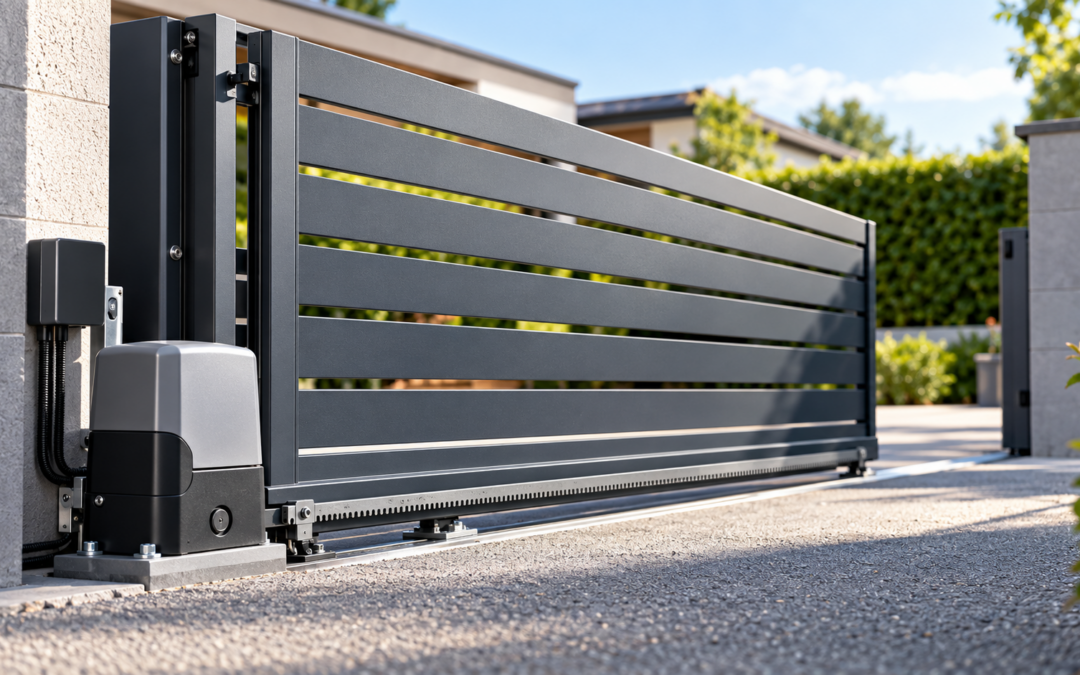
Most systems use a motor-driven gear that engages with a toothed rack attached to the gate. When activated, the motor moves the gate horizontally along a track or through a cantilever mechanism.
A typical sliding gate automation kit includes a motor, electronic control unit, remote controls and safety accessories. Some kits also include the gear rack required to move the gate.
Sliding gate kits are commonly installed at domestic driveways, business entrances, industrial facilities and gated developments.
At EasyGates, you’ll find a range of sliding gate opener kits designed for different gate sizes, weights and operating requirements.
How Does a Sliding Gate Kit Work?
An automatic sliding gate operates using an electric motor connected to a mechanical drive system.
When a signal is received from a remote control, keypad or another compatible access device, the control unit activates the motor.
The process involves five main stages:
- Activation: A remote control, access system or other compatible device sends an opening command.
- Motor operation: The electric motor turns a drive gear, known as a pinion.
- Gate movement: The pinion engages with the toothed rack attached to the gate, moving it horizontally.
- Position detection: Limit switches, encoders or other positioning systems determine when the gate has reached its required position.
- Automatic stopping: The control unit stops the motor, with optional automatic closing depending on the system configuration.
Many modern sliding gate motors also feature soft-start and soft-stop technology, reducing sudden movements and helping protect mechanical components.
What Components Are Included in a Sliding Gate Kit?
Understanding the main components will help you identify which products are required for a complete installation.
Sliding Gate Motor
The motor provides the power needed to move the gate. Motors are available in different capacities depending on gate weight, length and operating frequency.
For example, the NiceHome Filo 400 is designed for sliding gates weighing up to 400kg and measuring up to 5.5 metres in length.
Control Unit
The electronic control unit manages the gate’s operation, including opening and closing commands, motor settings and connected safety devices.
Many modern motors include an integrated control board, reducing the number of separate components required.
Gear Rack and Pinion
The gear rack is attached along the gate and engages with the motor’s pinion gear.
As the pinion rotates, it moves the gate horizontally.
Gear racks are available in different materials, including steel and nylon-reinforced options. The correct rack must be compatible with the motor and suitable for the installation.
Remote Controls and Access Devices
Remote controls provide convenient access without leaving your vehicle.
Depending on the automation system, additional access options may include keypads, intercoms and smartphone-compatible controls.
Safety Photocells and Safety Edges
Safety devices help reduce the risk of accidents involving moving gates.
Photocells detect interruptions across an infrared beam, while pressure-sensitive safety edges can detect contact with an obstruction.
The exact safety equipment required depends on the installation’s risk assessment.
How Do You Choose the Right Sliding Gate Motor?
Selecting the correct motor is essential for reliable operation and long-term performance.
Several factors should be considered before purchasing.
1. Gate Weight
Every sliding gate motor has a maximum supported gate weight.
Choosing an undersized motor can cause excessive wear, unreliable operation and premature failure.
For example:
| Sliding gate kit | Maximum gate weight | Maximum gate length |
|---|---|---|
| NiceHome Filo 400 | 400kg | 5.5m |
| NiceHome Filo 600 | 600kg | 7m |
| Nice Robus RB1000BDKCE | 1,000kg | 12m |
| Nice RunKit 4 RUN2500 | 2,500kg | 18m |
These are published maximum ratings, not a guarantee that every combination of weight and length is suitable. Always consult the manufacturer’s specifications and operating limits.
2. Gate Length
Gate length is equally important because longer gates require suitable travel distances, mechanical support and motor performance.
You should also consider the available space beside the entrance.
A traditional tracked sliding gate generally requires sufficient clearance for the entire gate to move sideways. Cantilever gates typically need additional space for their counterbalance section.
3. Frequency of Use
A residential driveway gate might only operate several times each day, while a commercial entrance could experience frequent opening and closing cycles.
Motors designed for intensive use are generally better suited to busy commercial and industrial applications.
For demanding installations, the Nice RUN 400 Hi-Speed Gate Kit offers a high-speed automation option with a published duty cycle of up to 60 cycles per hour under specified conditions.
4. Motor Voltage
Sliding gate motors commonly use 24V DC or 230V AC motor systems.
24V motors are often selected for domestic installations and can offer features such as obstacle detection, adjustable movement and optional battery backup.
230V motors are also available for larger or more demanding applications.
However, voltage alone doesn’t determine performance. Motor capacity, duty cycle and manufacturer specifications are more important when assessing suitability.
What Safety Features Should Sliding Gate Kits Have?
Safety is one of the most important considerations when installing an automated sliding gate.
Powered gates can create crushing, shearing, drawing-in and impact hazards if they are incorrectly designed or installed.
A suitable installation may require:
-
Safety photocells positioned to detect relevant obstructions.
-
Pressure-sensitive safety edges at identified hazardous points.
-
Appropriate force limitation and obstacle detection.
-
Emergency manual release facilities.
-
Secure mechanical stops and suitable gate supports.
-
Safety testing, commissioning and documented risk assessment.
In the UK, powered gate installations must meet applicable safety legislation and relevant standards, including BS EN 12453.
Simply purchasing a motor with obstacle detection does not automatically make an installation safe or compliant.
Professional installation and a site-specific risk assessment are strongly recommended.
Can You Control Sliding Gates With a Smartphone?
Yes. Certain sliding gate automation systems support smartphone control when used with compatible accessories.
For example, the LiftMaster SL1000EVK Sliding Gate Opener Kit supports myQ connectivity when paired with the appropriate internet gateway.
Depending on the system and configuration, smartphone functionality can include remote opening and closing, notifications and access management.
This can be particularly useful for homeowners expecting deliveries or businesses managing controlled vehicle access.
Remote operation must still be designed around appropriate safety measures, particularly when the gate cannot be directly observed.
Can You Install a Sliding Gate Kit Yourself?
Some sliding gate kits are designed with installer-friendly features, including simplified accessory wiring and automatic programming.
However, installing an automated gate requires more than mounting a motor.
The gate must move freely, the foundation must be suitable, the rack and pinion must be aligned correctly, and all safety systems must be installed and tested.
Electrical connections must also be completed safely and in accordance with applicable requirements.
Although experienced installers may find certain kits straightforward, professional installation is generally the safest option for ensuring reliable operation and compliance.
Are Sliding Gate Kits Suitable for Domestic and Commercial Properties?
Sliding gate automation can be used in both residential and commercial environments.
For domestic properties, the main benefits typically include convenience, controlled access and improved use of driveway space.
Commercial installations may require larger motors, greater operating capacity and integration with access control systems.
For particularly heavy gates, the Nice RunKit 4 RUN2500 supports gates weighing up to 2,500kg and measuring up to 18 metres, subject to the manufacturer’s installation requirements.
Choosing a system appropriate to the expected workload helps maintain reliable performance and minimise unnecessary maintenance.
How Much Maintenance Does a Sliding Gate System Need?
Even well-designed sliding gate systems require periodic inspection and maintenance.
Routine checks should include examining the gate track, rollers, gear rack, mechanical fixings and safety devices.
Tracks should be kept clear of debris, and any unusual noises or changes in movement should be investigated.
Photocells, safety edges and emergency release mechanisms should also be tested at appropriate intervals.
A planned maintenance programme can help identify developing faults before they result in breakdowns or safety concerns.
Choosing the Right Sliding Gate Kit From EasyGates
The right sliding gate kit depends on the physical characteristics of your gate, how frequently it will operate and the level of automation required.
Before making a purchase, establish the gate’s weight, length, movement type and available installation space. Consider whether you require smartphone access, additional remote controls or integration with an existing access control system.
Most importantly, ensure the selected motor and safety equipment are suitable for the complete installation.
At EasyGates, you can explore a wide selection of automation products, from compact residential systems to powerful commercial gate motors.
Browse the full range of sliding gate kits and automation systems to find a solution suited to your requirements.