
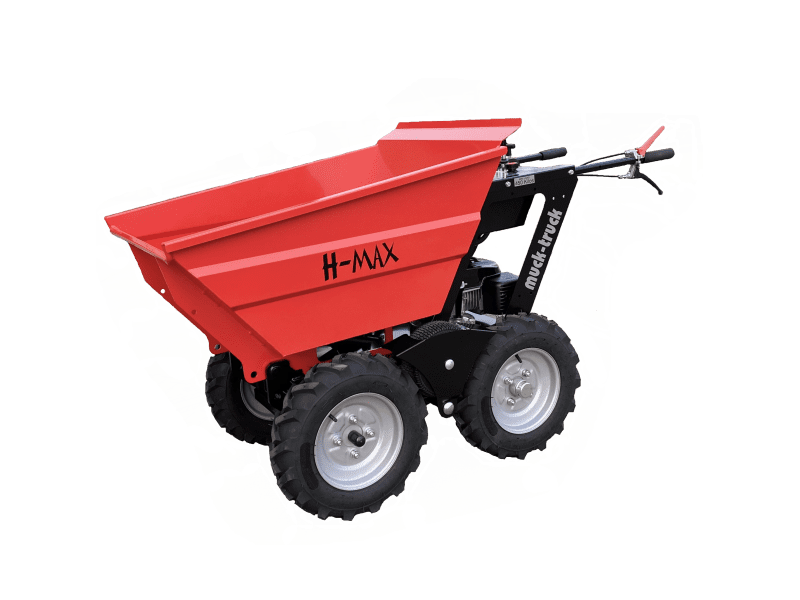
When it comes to transporting heavy materials on construction sites, landscaping projects, farms, equestrian facilities, and large gardens, choosing the right equipment can have a significant impact on productivity, safety, and compliance. While the traditional wheelbarrow has been a staple tool for generations, powered wheelbarrows are increasingly becoming the preferred solution for heavy-duty work.
This guide compares powered wheelbarrows and traditional wheelbarrows from a practical and compliance perspective, helping businesses and operators determine which option best suits their needs.
Understanding the Difference
A traditional wheelbarrow relies entirely on manual effort. The operator must lift, balance, push, manoeuvre, and tip the load using physical strength. While effective for smaller jobs, traditional wheelbarrows can become challenging when transporting heavy materials over long distances or uneven terrain.
A powered wheelbarrow, sometimes referred to as a motorised wheelbarrow or micro dumper, uses an engine or electric drive system to assist with movement and load transport. Modern machines can carry significantly heavier loads while reducing the physical demands placed on the operator. According to Muck Truck, powered wheelbarrows can carry up to three times the load of a conventional wheelbarrow while maintaining manoeuvrability in confined spaces.
Compliance and Manual Handling Requirements
One of the most important considerations for employers and contractors is compliance with UK health and safety regulations.
The Health and Safety Executive (HSE) places a strong emphasis on reducing manual handling risks wherever reasonably practicable. Businesses are expected to avoid hazardous manual handling activities where possible and use mechanical aids to minimise the risk of injury. Research cited by Muck Truck highlights the significant number of working days lost annually due to workplace injuries and reinforces the importance of using machinery rather than relying solely on physical labour when appropriate.
For organisations looking to improve compliance, powered wheelbarrows can support safer working practices by reducing the strain associated with lifting, pushing, and transporting heavy loads.
Load Capacity and Productivity
For light gardening tasks or occasional DIY projects, a traditional wheelbarrow may be perfectly adequate. However, heavy-duty applications often demand greater carrying capacity.
Standard wheelbarrows typically require multiple trips to move large quantities of materials such as soil, gravel, concrete, rubble, manure, or paving supplies. This increases labour time and operator fatigue.
Powered wheelbarrows offer a substantial advantage in this area. The original Muck-Truck® model carries up to 250kg, while larger models such as the Max-Truck™ can transport up to 365kg and climb slopes while fully loaded.
Fewer trips mean increased efficiency, reduced labour costs, and faster project completion times. For contractors working to tight deadlines, these productivity gains can quickly justify the investment.
Reducing Operator Fatigue
Physical fatigue remains one of the most common causes of workplace injuries and reduced productivity.
With a traditional wheelbarrow, operators must constantly support and balance the load while navigating obstacles, inclines, and uneven ground. As load weight increases, so does the risk of strain injuries affecting the back, shoulders, arms, and knees.
Powered wheelbarrows dramatically reduce these physical demands. The machine provides the driving force, allowing operators to focus on steering and positioning rather than exerting continuous effort. This makes them particularly valuable on larger sites where materials must be moved throughout the day.
For businesses managing multiple employees, reducing fatigue can contribute to better overall workforce wellbeing and improved operational efficiency.
Performance on Challenging Terrain
Heavy-duty work rarely takes place on perfectly level surfaces.
Construction sites, agricultural environments, landscaping projects, and equestrian facilities often involve mud, gravel, slopes, and uneven ground. Traditional wheelbarrows can become difficult to control under these conditions, particularly when carrying heavy loads.
Powered wheelbarrows are specifically designed to tackle challenging terrain. Many models feature robust drive systems, all-terrain tyres, and four-wheel-drive capabilities that provide greater traction and stability. Some machines can climb slopes of up to 30 degrees while carrying full loads.
This capability not only improves productivity but also enhances site safety by reducing the likelihood of spills, tipping incidents, or operator strain.
Sustainability and Environmental Considerations
As sustainability becomes increasingly important across the construction and landscaping sectors, electric-powered wheelbarrows are gaining popularity.
Modern electric models offer the same productivity benefits as petrol-powered alternatives while eliminating emissions during operation. They are particularly suited to indoor projects, environmentally sensitive locations, and areas where noise restrictions apply. Electric powered wheelbarrows also reduce fuel costs and support broader sustainability objectives.
For organisations seeking greener working practices, battery-powered equipment can provide a practical long-term solution.
Cost vs Long-Term Value
Traditional wheelbarrows have a lower initial purchase cost, making them attractive for occasional users and small-scale projects.
However, businesses should consider the wider costs associated with manual labour, reduced productivity, operator fatigue, and potential injury risks. A powered wheelbarrow represents a larger upfront investment but often delivers substantial returns through faster material handling, lower labour requirements, and improved safety outcomes.
For many professional users, the long-term productivity gains can outweigh the initial purchase price.
Final Verdict
For occasional light-duty tasks, a traditional wheelbarrow remains a practical and cost-effective tool. However, when it comes to heavy-duty work, powered wheelbarrows offer clear advantages in safety, productivity, compliance, and operator comfort.
Businesses looking to reduce manual handling risks, improve efficiency, and enhance site performance should seriously consider investing in a powered solution. With a range of petrol and electric-powered models available, industry-leading manufacturers such as Muck Truck provide options suitable for construction, landscaping, agriculture, equestrian facilities, and many other demanding applications. Learn more about powered wheelbarrows and micro dumpers at Muck Truck.