
A Complete Guide to Urinal Water-Saving Systems, Automatic Flush Controls and Reducing Commercial Washroom Costs
Water efficiency is becoming an increasingly important consideration for businesses across the UK. From offices and schools to shopping centres and hospitality venues, commercial washrooms can consume significant amounts of water, particularly when urinals are operating inefficiently.
Traditional urinal flushing systems can waste thousands of litres of water every year by flushing unnecessarily, even when facilities are not being used.
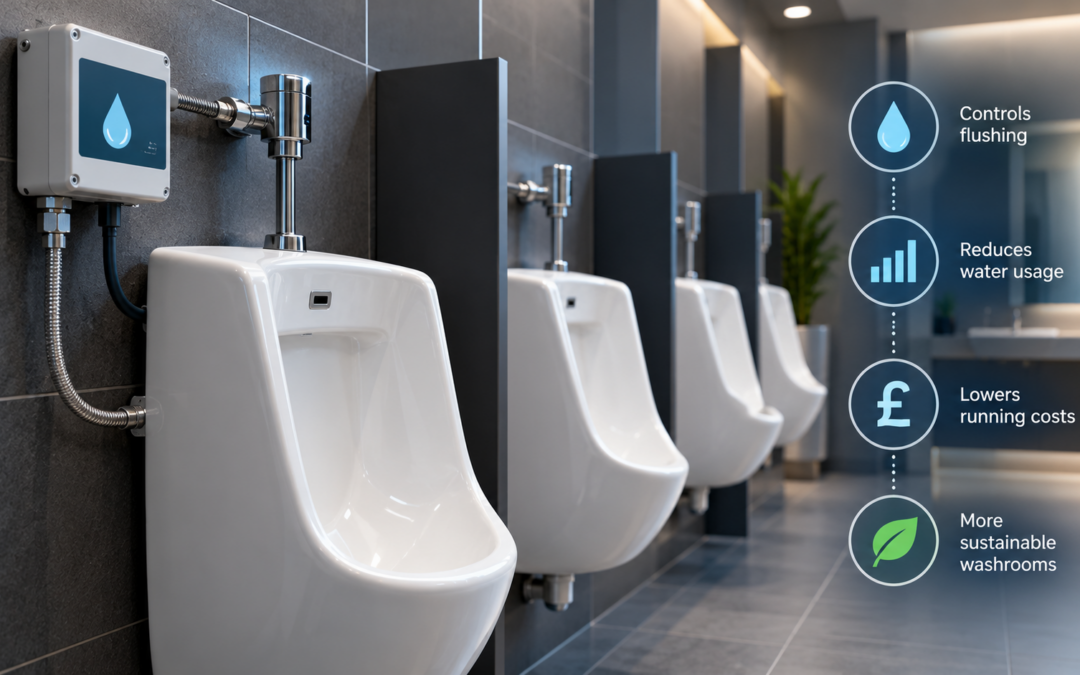
A water management system for urinals offers a practical way to reduce this waste, control flushing frequency and potentially lower operating costs without compromising washroom hygiene.
In this guide, we’ll explain how urinal water management systems work, the different types available and what businesses should consider when choosing the right solution.
What Is a Water Management System for Urinals?
A water management system for urinals is a device that controls how frequently urinals flush, helping to reduce unnecessary water consumption in commercial washrooms.
Rather than allowing a urinal cistern to refill and flush continuously, these systems use timers, sensors or programmable controls to regulate flushing according to usage patterns.
This means water is used when required rather than being wasted during periods when the washroom is empty.
Urinal water management systems are particularly beneficial in offices, schools, leisure centres, restaurants and other commercial environments where washroom usage varies throughout the day.
At Hygenie Washrooms, businesses can explore specialist urinal water management solutions designed to reduce water consumption while maintaining effective washroom hygiene.
How Does a Urinal Water Management System Work?
A urinal water management system works by regulating the water supplied to the urinal flushing mechanism.
Traditional automatic cisterns may flush at fixed intervals throughout the day and night, regardless of whether the facilities are being used.
Water management systems improve efficiency by adjusting flushing frequency based on time settings or detected activity.
The process typically involves four stages:
- Monitoring: The system monitors washroom activity or follows a programmed flushing schedule.
- Water control: An electronic controller regulates the water supply to the flushing cistern or valve.
- Controlled flushing: Water is released at appropriate intervals rather than continuously.
- Reduced consumption: Unnecessary flushing is minimised, particularly during quiet periods and outside operating hours.
Depending on the system, flushing intervals can be adjusted to reflect the building’s opening hours, occupancy levels and hygiene requirements.
What Are the Different Types of Urinal Water Management Systems?
There are several approaches to managing urinal water consumption, with sensor-operated and timed systems among the most common.
Sensor Water Management Systems
Sensor-operated systems use motion or occupancy detection to identify activity within the washroom.
When the washroom is occupied, the system allows flushing according to its programmed settings. During periods of inactivity, unnecessary flushing is reduced or prevented.
This makes sensor-based systems particularly suitable for facilities with unpredictable usage patterns.
For example, an office washroom might experience heavy usage during working hours but very little activity overnight or at weekends.
A sensor system can respond to these changing patterns without requiring manual adjustments.
Hygenie’s sensor water management systems are designed to distinguish between active and idle periods, with potential water savings of up to 90% in suitable installations. Actual savings depend on the existing flushing arrangement and usage.
Timed and Flow Control Water Management Systems
Timed water management systems regulate flushing according to a predetermined schedule.
Rather than allowing a cistern to flush repeatedly throughout the day, the controller limits the number of flushes to a more appropriate frequency.
For example, a system might be configured to flush several times during business hours, with adjustments made according to expected usage.
Hygenie’s Flow Control Water Management Unit can be configured to provide between four and twenty-four flushes per day, depending on the requirements of the site.
This approach can be particularly effective in buildings with predictable opening hours and consistent washroom usage.
How Much Water Can a Urinal Water Management System Save?
The potential savings can be substantial, particularly where older urinals flush continuously.
Consider a commercial washroom with a 9-litre urinal cistern that flushes four times every hour.
Illustrative annual water consumption
Unmanaged urinal
315,360 L
4 flushes/hour, 24 hours/day, 365 days/year
Managed urinal
37,440 L
2 flushes/hour, 8 hours/day, 260 days/year
Potential reduction
88.1%
Illustrative calculation using the same 9-litre flush volume. Not a guaranteed saving or a measurement from a particular installation.
In this example, introducing controlled flushing could save approximately 277,920 litres of water annually.
The financial benefit depends on local water and wastewater charges, existing consumption and the settings of the installed system.
For businesses operating multiple urinals across several washrooms, the combined savings could be considerable.
What Are the Benefits of Urinal Water Management Systems?
1. Reduced Water Consumption
The most obvious benefit is a reduction in unnecessary flushing.
By controlling when water is used, businesses can avoid wasting large quantities of treated mains water.
This is particularly valuable in premises where urinals would otherwise continue flushing overnight, at weekends or during periods of closure.
2. Lower Commercial Water Bills
Businesses with metered water supplies pay for the water they consume.
Reducing unnecessary flushing can therefore help lower water bills and, where applicable, wastewater charges.
The potential savings are especially relevant for large commercial buildings, schools, factories and multi-site organisations.
3. Improved Environmental Performance
Water conservation is an important part of responsible building management.
Using less water reduces demand on water supplies and can support wider sustainability objectives.
For organisations working towards environmental targets, upgrading inefficient washroom systems provides a measurable opportunity to improve resource efficiency.
4. Greater Control Over Washroom Facilities
Programmable water management systems allow facilities managers to adjust flushing schedules to match building usage.
For example, a school might require regular flushing during term time but significantly less during holidays.
Similarly, an office operating Monday to Friday may not need the same flushing frequency at weekends.
5. Reduced Unnecessary Wear
Frequent flushing places additional demand on cistern components, valves and associated plumbing.
Reducing excessive operation may help limit wear on these components, although routine inspection and maintenance remain essential.
Can Water-Saving Urinals Still Maintain Good Hygiene?
Yes. Properly configured urinal water management systems can reduce water consumption while maintaining effective hygiene.
However, water efficiency should never come at the expense of cleanliness.
If flushing frequency is reduced too aggressively, urine residue, mineral deposits and unpleasant odours may become more difficult to manage.
This is why water management should be considered alongside an appropriate cleaning and maintenance programme.
Hygenie offers complementary urinal and WC sanitising systems that automatically dispense sanitising fluid to help control deposits and maintain cleaner facilities.
The company also provides urinal sleeves and mats, which can help reduce blockages, improve freshness and support washroom maintenance.
Combining appropriate flushing controls with effective hygiene products can help businesses achieve a balance between water efficiency and cleanliness.
Are Urinal Water Management Systems Required by UK Regulations?
UK water regulations include requirements intended to prevent unnecessary water consumption from urinal flushing systems.
In England and Wales, the Water Supply (Water Fittings) Regulations 1999 and their associated requirements address the control of automatic urinal flushing cisterns.
Relevant installations must use appropriate arrangements to regulate flushing and prevent excessive water use.
However, the exact requirements depend on the type of urinal, flushing mechanism and installation.
Businesses should ensure that any new system or modification complies with the applicable water fittings requirements and is installed correctly.
A professional assessment can help identify older systems that may be operating inefficiently or require upgrading.
How Do You Choose the Right Urinal Water Management System?
Choosing the correct system depends on the size of the washroom, its usage patterns and the existing plumbing arrangement.
Several factors should be considered.
Washroom Usage
A busy shopping centre may require a different flushing strategy from a small office washroom.
Sensor-based systems can be useful where occupancy varies significantly, while timed systems may be suitable for predictable operating schedules.
Existing Plumbing
Not every system is compatible with every cistern or urinal installation.
The existing flushing arrangement should be assessed before selecting a water management device.
Hygiene Requirements
The system must provide sufficient flushing to maintain acceptable hygiene standards.
This is particularly important in heavily used facilities where reduced flushing could contribute to odour or maintenance problems.
Maintenance and Servicing
Water management systems should be inspected periodically to ensure they continue operating correctly.
Sensors, batteries, valves and programmed settings may require maintenance or adjustment over time.
Potential Return on Investment
Businesses should compare current water consumption with the expected savings from installing a management system.
A professional water audit can help establish whether the investment is financially worthwhile.
Why Is a Commercial Washroom Water Audit Important?
Before installing a water management system, it is useful to understand how much water your existing urinals consume.
A washroom water audit can identify excessive flushing, faulty controls and opportunities to improve efficiency.
For example, a urinal that flushes every five minutes throughout the day could consume a significant amount of water without anyone noticing.
Hygenie offers a washroom survey service to assess existing facilities and recommend suitable improvements.
This helps businesses choose solutions based on their actual requirements rather than relying on assumptions about water usage.
Choosing a Urinal Water Management System From Hygenie
An effective urinal water management system can help businesses reduce unnecessary water consumption, control operating costs and improve the efficiency of their commercial washrooms.
Whether a sensor-operated or timed system is most appropriate will depend on the building’s occupancy, plumbing and hygiene requirements.
At Hygenie, we provide a range of commercial washroom services, including water management, urinal sanitising and ongoing washroom maintenance.
Our team works with businesses across the Midlands and surrounding regions, helping organisations identify practical ways to improve washroom performance.
If you’re concerned about excessive urinal flushing or want to explore opportunities to reduce water consumption, contact Hygenie to discuss your requirements and arrange a washroom survey.