
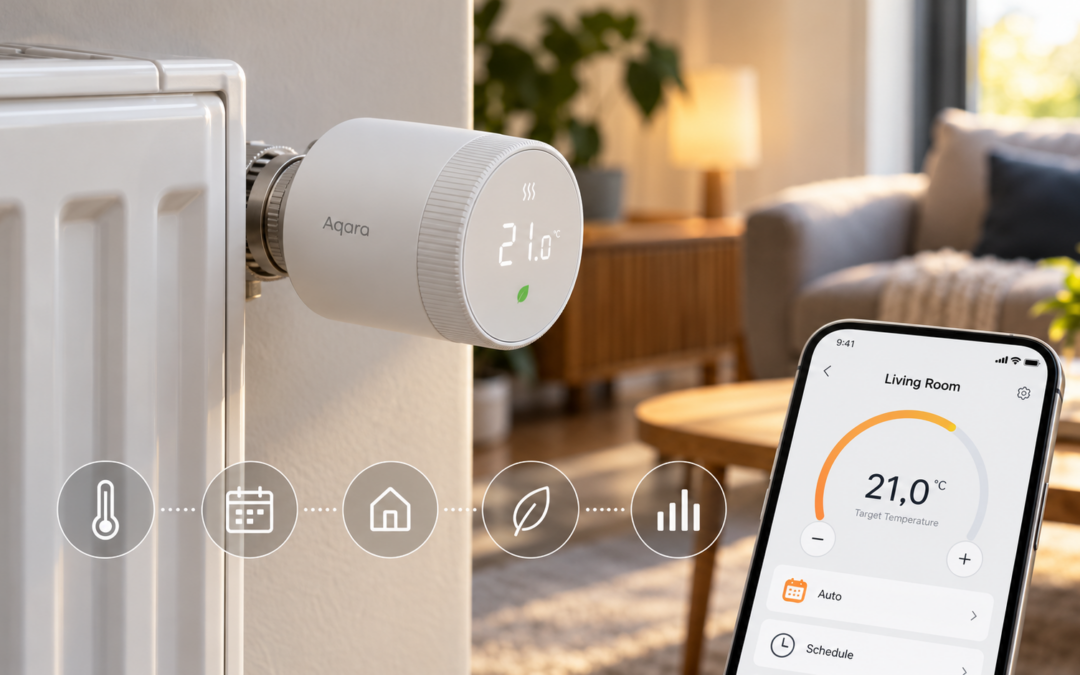
A Complete Guide to Smarter Home Heating, Automation and Energy Efficiency
Heating your home efficiently is about more than simply turning the thermostat up or down. With rising energy costs and growing interest in smart home technology, homeowners are increasingly looking for ways to control temperatures more precisely, reduce unnecessary heating and improve everyday comfort.
A smart radiator thermostat offers a practical solution, allowing you to manage individual radiators, create personalised heating schedules and automate temperatures based on your daily routine.
Whether you’re upgrading an existing central heating system or building a fully connected smart home, understanding how smart radiator controls work can help you make better decisions about your heating.
What Is a Smart Radiator Thermostat?
A smart radiator thermostat is a connected heating control device that replaces a traditional thermostatic radiator valve (TRV) head, allowing you to adjust and automate the temperature of an individual radiator.
Unlike a conventional radiator thermostat, which requires manual adjustment, a smart radiator thermostat can offer remote control, programmable schedules and integration with other smart home devices.
This means you can heat specific rooms when they’re needed rather than relying on the same heating schedule throughout your entire property.
Smart radiator thermostats are particularly useful for households looking to improve comfort, minimise wasted energy and introduce greater flexibility into their existing heating system.
How Does a Smart Radiator Thermostat Work?
A smart radiator thermostat works by electronically controlling the flow of hot water into a radiator.
Traditional thermostatic radiator valves use a mechanical mechanism to regulate heat. Smart versions use electronic temperature sensing, a motorised valve controller and wireless connectivity to provide more precise, automated control.
The process typically involves four stages:
- Temperature monitoring: The device measures the temperature around the radiator and compares it with your chosen setting.
- Automatic valve adjustment: A small motor adjusts the radiator valve to increase or reduce the flow of hot water.
- Wireless communication: The thermostat communicates with a compatible smart home hub or controller.
- Smart automation: Heating preferences, schedules and connected sensors help determine when individual rooms should receive heat.
Importantly, a smart radiator thermostat doesn’t usually control the boiler directly. It regulates how much heat an individual radiator receives when hot water is available from the central heating system.
For full heating automation, radiator controls may need to work alongside a compatible boiler controller or existing central heating thermostat.
What Are the Benefits of Smart Radiator Controls?
1. Individual Room Temperature Control
One of the biggest advantages of smart radiator controls is the ability to manage heating room by room.
For example, you might prefer your living room at 21°C during the evening but only need your bedroom heated to 18°C overnight.
Rather than heating every room equally, smart radiator thermostats allow you to create different temperature settings based on how each space is used.
The Aqara Radiator Thermostat E1 provides individual radiator control and can be combined with other Aqara devices for more advanced heating management.
2. Reduced Energy Waste
Smart radiator thermostats can help reduce energy consumption by limiting unnecessary heating.
Instead of leaving radiators running in unused bedrooms, spare rooms or home offices, you can schedule them to operate only when required.
For example, a home office might only need heating between 9am and 5pm on weekdays. Outside these hours, the radiator can automatically switch to a lower temperature setting.
Actual savings depend on your existing heating habits, insulation, boiler controls and how effectively your heating system is configured.
3. Remote Heating Control
Connected radiator thermostats allow you to manage heating settings through a smartphone app.
With a compatible Aqara hub and the Aqara Home app, you can adjust radiator temperatures without physically visiting each room.
This is particularly convenient when your plans change unexpectedly or you want to adjust heating before returning home.
4. Improved Everyday Comfort
Smart radiator controls can also help maintain more consistent room temperatures.
Rather than frequently adjusting traditional radiator valves, you can establish preferred temperatures and allow the devices to manage the heating automatically.
For households with different comfort preferences, this flexibility can make a noticeable difference.
How Can Smart Radiator Thermostats Save Energy?
The greatest energy-saving opportunities come from using smart radiator thermostats alongside sensible heating schedules and automated controls.
Here are some practical examples.
Automatically Reduce Heating When Windows Are Open
Heating a room while a window is open can waste energy.
By connecting a compatible Aqara Door and Window Sensor to your smart heating setup, you can create automations that reduce radiator heating when a window is opened.
Once the window is closed, the system can return to its normal heating schedule.
Heat Rooms According to Occupancy
Not every room needs to be heated continuously.
A compatible Aqara Motion Sensor P1 can be used within automations to help adjust heating based on activity.
For example, a spare room could remain at a lower temperature until activity is detected.
Occupancy-based heating should be configured carefully, as someone sitting quietly may not trigger a conventional motion sensor.
Create Personalised Heating Schedules
Smart radiator thermostats can automatically follow schedules that reflect your household’s routine.
You might programme your heating to:
-
Warm the bathroom before your morning routine.
-
Reduce bedroom temperatures during working hours.
-
Heat the living room before the evening.
-
Lower temperatures throughout the house overnight.
These small adjustments can help avoid unnecessary heating while maintaining a comfortable environment.
Are Smart Radiator Thermostats Compatible With Existing Radiators?
Many smart radiator thermostats are designed to work with existing hot-water central heating systems.
However, compatibility depends on the type of radiator valve already installed.
The Aqara Radiator Thermostat E1 supports the common M30 × 1.5 mm threaded connection and includes adapters for selected Danfoss RA, RAV and RAVL valves.
This makes it suitable for many UK radiator installations without replacing the entire radiator.
However, smart thermostatic radiator heads cannot simply be fitted to every valve. Manual valves, certain specialist systems and incompatible fittings may require modifications or professional advice.
Before purchasing, check your existing radiator valve type and the manufacturer’s compatibility information.
Do Smart Radiator Thermostats Need a Hub?
Some smart radiator thermostats connect directly to Wi-Fi, while others use wireless communication technologies such as Zigbee or Thread.
The Aqara Radiator Thermostat E1 uses Zigbee 3.0 and requires a compatible Aqara hub for connected smart functionality.
An Aqara hub acts as the communication centre between your radiator thermostat, smartphone app and other compatible devices.
For households starting their smart heating journey, the Aqara Radiator Thermostat E1 Duo & Hub E1 Starter Bundle combines two radiator thermostats with a compatible hub.
This provides a convenient starting point for introducing room-by-room heating control.
How Do Temperature Sensors Improve Smart Radiator Heating?
Although smart radiator thermostats contain built-in temperature sensors, their position next to a warm radiator can affect the readings.
An additional temperature sensor placed elsewhere in the room can provide a more representative measurement of the surrounding environment.
The Aqara Radiator Thermostat E1 & Temperature and Humidity Sensor T1 Bundle combines radiator control with separate room temperature monitoring.
For example, placing the temperature sensor away from the radiator allows the system to respond to the temperature experienced in the wider room rather than relying solely on readings immediately beside the heat source.
This can improve comfort and help prevent rooms from becoming unnecessarily warm. A compatible Aqara hub is required for the connected setup.
Can Smart Radiator Thermostats Work With Alexa, Google Home and Apple Home?
Many modern smart radiator thermostats integrate with popular smart home platforms, making heating control part of a wider connected home.
Depending on the thermostat, hub and platform configuration, users may be able to adjust temperatures through voice commands or incorporate heating into smart home routines.
The Aqara Radiator Thermostat E1 supports integration with major smart home ecosystems through compatible Aqara hubs.
For example, you could create an evening routine that adjusts compatible lighting and radiator settings together.
Always check the specific hub and platform compatibility before purchasing, particularly where Matter integration or advanced automation features are important.
Which Aqara Smart Radiator Thermostat Should You Choose?
For homeowners considering an upgrade, Aqara offers several options to suit different heating requirements.
The Aqara Radiator Thermostat W600 is a newer option featuring Thread and Zigbee connectivity, Matter support, precise 0.5°C temperature adjustments and compatibility with a wide selection of radiator valves.
In Thread mode, it can connect to compatible Matter ecosystems using a Thread Border Router and Matter controller, without requiring a proprietary Aqara hub. Zigbee mode enables additional Aqara Home automation features with a compatible Aqara hub.
For households looking to upgrade multiple rooms, the Aqara Radiator Thermostat W600 Quadro Bundle provides four smart radiator thermostats, making it easier to introduce coordinated heating control throughout the home.
Are Smart Radiator Thermostats Worth It?
Smart radiator thermostats can be a worthwhile investment for homeowners who want greater control over their heating, improved comfort and opportunities to reduce energy waste.
They are particularly useful in larger properties, households with varying schedules and homes where certain rooms are used less frequently.
Although smart radiator controls won’t automatically guarantee lower energy bills, combining intelligent schedules, individual room temperatures and compatible automation sensors can make heating more responsive to your lifestyle.
Explore the range of Aqara smart radiator thermostats and discover how connected heating technology can help create a more comfortable, efficient home.