
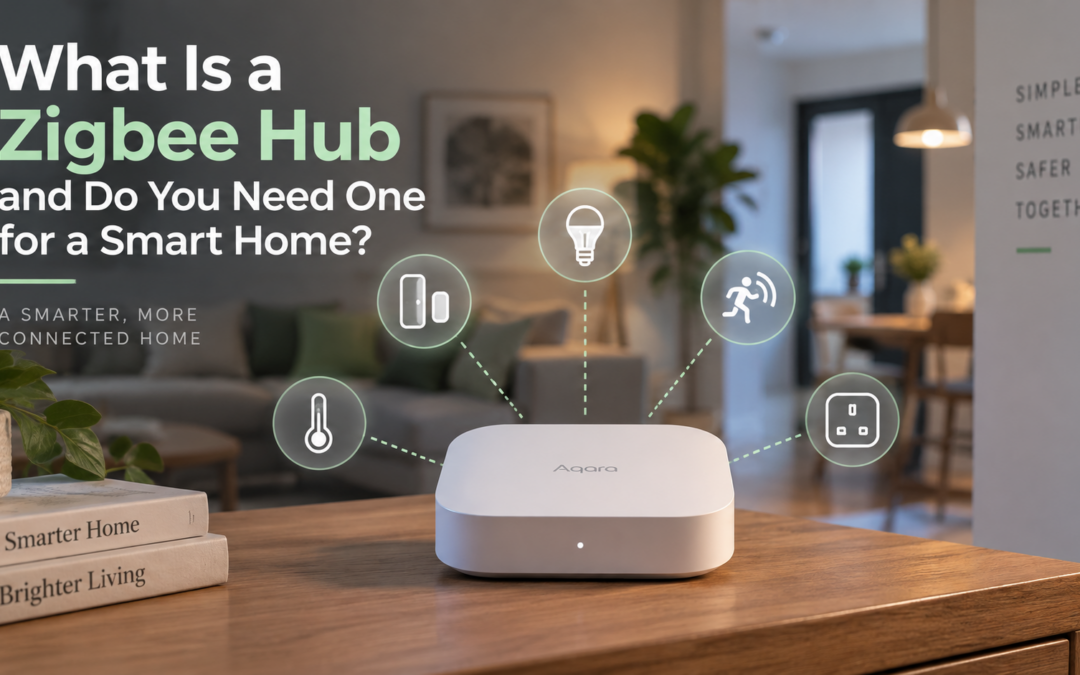
Smart home technology has made it easier than ever to control lighting, heating, security, sensors and other connected devices from your phone or through voice assistants. However, as you start adding more devices to your home, you may come across terms such as Zigbee, smart hubs and bridges.
One of the most common questions is: what is a Zigbee hub, and do you actually need one?
A Zigbee hub is a central device that allows compatible Zigbee smart home products to communicate with each other and connect to your wider smart home system. Rather than every individual device connecting directly to your WiFi network, Zigbee devices communicate through a low-power wireless network, with the hub acting as the link between those devices and your smart home platform.
For homes with multiple sensors, switches and other connected products, this can create a faster, more reliable and more scalable smart home setup.
What Is Zigbee?
Zigbee is a wireless communication protocol designed specifically for connected devices and smart home technology.
Like WiFi and Bluetooth, it allows devices to communicate wirelessly. However, Zigbee has been designed with low-power devices in mind. This makes it particularly well suited to smart home products that need to operate for long periods using small batteries.
Zigbee is commonly used for devices including:
- Motion sensors
- Door and window sensors
- Temperature and humidity sensors
- Smart switches
- Smart plugs
- Smart lighting
- Wireless buttons
- Security sensors
- Smart thermostats
- Other home automation devices
Instead of every product requiring a direct connection to your home WiFi, compatible Zigbee devices can form their own network.
This is where a Zigbee hub becomes important.
How Does a Zigbee Hub Work?
A Zigbee hub acts as the central connection point between Zigbee devices and the rest of your smart home.
For example, you might have a Zigbee motion sensor in your hallway and a compatible smart light. The sensor can detect movement and communicate that information through the Zigbee network, allowing an automation to switch on the light.
The hub effectively helps coordinate these connected devices while providing a route into your wider smart home ecosystem.
Depending on the products and platform being used, your hub may also allow you to control devices using an app, voice commands or automated routines.
The result is a connected home in which devices can work together rather than operating as completely separate products.
What Are the Benefits of Using a Zigbee Hub?
One of the main benefits of Zigbee is that it has been designed for smart home connectivity rather than general internet use.
Reduced Reliance on WiFi
A home containing dozens of WiFi smart devices can place additional demands on the wireless network.
Zigbee devices do not all need their own direct WiFi connection. Instead, they communicate over the Zigbee network and use the hub to integrate with the wider smart home system.
This can be particularly useful as your smart home grows.
Low Power Consumption
Zigbee is designed to consume relatively little power.
This makes it ideal for battery-powered products such as door sensors, motion detectors and wireless buttons, where regularly replacing or charging batteries would be inconvenient.
Strong Device Connectivity
Many powered Zigbee devices can help create what is known as a mesh network.
In a mesh network, compatible devices can help pass information across the network rather than every device having to communicate directly with the hub.
This can improve coverage and reliability across larger homes, although the exact functionality depends on the products being used.
Smart Home Automation
Perhaps the biggest reason for using a smart home hub is automation.
A connected smart home becomes much more useful when different devices can react to each other.
For example, you could create automations that switch lights on when motion is detected, alert you when a door opens, adjust heating according to temperature or trigger certain actions when you leave or arrive home.
Instead of simply controlling individual devices from an app, a hub can help turn those devices into part of a coordinated smart home system.
Do All Zigbee Devices Need a Hub?
Zigbee devices generally need a Zigbee controller or coordinator to become part of a smart home network, but this does not always mean purchasing a completely separate hub.
Some smart home products and controllers have Zigbee functionality built in.
This means it is important to check the specifications and compatibility of both your existing smart home equipment and any new devices before purchasing.
If you already have a compatible hub or controller capable of managing the devices you want to use, you may not need another one.
However, if you are building a smart home around a particular ecosystem, choosing a dedicated compatible hub can make installation and management considerably easier.
Are All Zigbee Devices Compatible With Each Other?
Not necessarily.
Although two products may both use Zigbee, that does not automatically guarantee that they will work together exactly as expected.
Manufacturers may implement features differently, while certain devices may be designed primarily to work within a particular smart home ecosystem.
Before buying a new device, check whether it is officially supported by your hub and whether all the features you need will be available.
Compatibility becomes particularly important when creating more advanced automations involving multiple types of smart home technology.
A little planning at the beginning can prevent you from ending up with several separate apps, hubs and devices that cannot communicate effectively.
How Many Devices Can Connect to a Zigbee Hub?
The number of devices supported varies depending on the hub, manufacturer and wider network configuration.
For a typical smart home, modern hubs can provide enough capacity for numerous sensors and connected devices. However, anyone planning a particularly extensive installation should check the manufacturer’s stated device limits.
It is also worth thinking beyond how many devices you currently own.
You may initially purchase a hub for a couple of motion sensors and smart switches, but over time you could add door sensors, temperature monitoring, smart lighting, plugs and other products.
Choosing a hub that gives you room to expand can therefore be worthwhile.
Where Should You Put a Zigbee Hub?
The ideal position depends on the hub and layout of your home, but a relatively central location can help provide good coverage.
Avoid placing the hub somewhere heavily obstructed by large metal objects or other materials that could interfere with wireless signals.
If you have a large property, the mesh capabilities of compatible powered Zigbee devices can also help extend the network.
You should always follow the manufacturer’s installation recommendations for your particular hub.
Zigbee Hub vs WiFi Smart Devices: Which Is Better?
Neither option is automatically better for every smart home.
WiFi devices can be extremely convenient, particularly when you only have a small number of connected products. They can often connect directly to your router without requiring an additional hub.
Zigbee becomes particularly attractive when you want to build a larger ecosystem containing numerous sensors and automation devices.
Rather than choosing purely between WiFi and Zigbee, many modern smart homes use a combination of technologies.
You might have WiFi security cameras, Zigbee sensors and other connected devices all operating as part of the same wider setup.
The important consideration is whether the platforms you choose can work together in the way you need.
How Does a Zigbee Hub Fit Into a Wider Smart Home?
Think of the hub as one of the building blocks of your smart home rather than the entire system.
Your wider setup could include sensors that collect information, smart devices that perform actions, a hub that enables communication and a smart home platform that allows you to control everything.
For example, a motion sensor could detect someone entering a room. That event could be communicated through the hub and used to trigger a compatible light.
Similarly, a door sensor could form part of a security automation, while temperature sensors could provide information used to manage heating and comfort.
The real advantage comes from connecting devices in ways that make everyday tasks simpler.
Do You Need a Zigbee Hub?
You may benefit from a Zigbee hub if you want to use Zigbee-based sensors and devices, create more sophisticated smart home automations or build a connected home that can expand over time.
For someone who only wants one or two standalone WiFi devices, a dedicated Zigbee hub may not be necessary.
However, if you plan to install multiple motion sensors, door sensors, switches, buttons and other connected devices, a hub can become an important part of the system.
It provides a central point through which compatible devices can communicate and helps bring different elements of your smart home together.
Choosing the Right Zigbee Hub for Your Smart Home
Before choosing a hub, think about the devices you already have and those you may want to add in the future.
Check compatibility carefully and consider which wider smart home platforms you intend to use. You should also look at how many devices the hub supports, the types of automation available and whether it provides the connectivity features required by your chosen ecosystem.
Products such as the Aqara Hub M100 can provide a central foundation for compatible connected devices and help bring different elements of a smart home together.
The right hub should not simply work with the devices you own today. It should also give you the flexibility to continue developing your smart home as your requirements change.
Build a Smarter, More Connected Home
A Zigbee hub can be one of the most useful components in a growing smart home.
By allowing compatible sensors, switches and other devices to communicate efficiently, it can reduce reliance on individual WiFi connections while opening the door to more useful home automation.
Whether you actually need one depends on the technology you intend to use. But if you are planning a smart home with multiple sensors and connected devices, choosing the right hub can provide a reliable foundation for your setup.
Explore the Aqara Hub M100 and discover how a Zigbee hub can help bring compatible smart home devices together.